
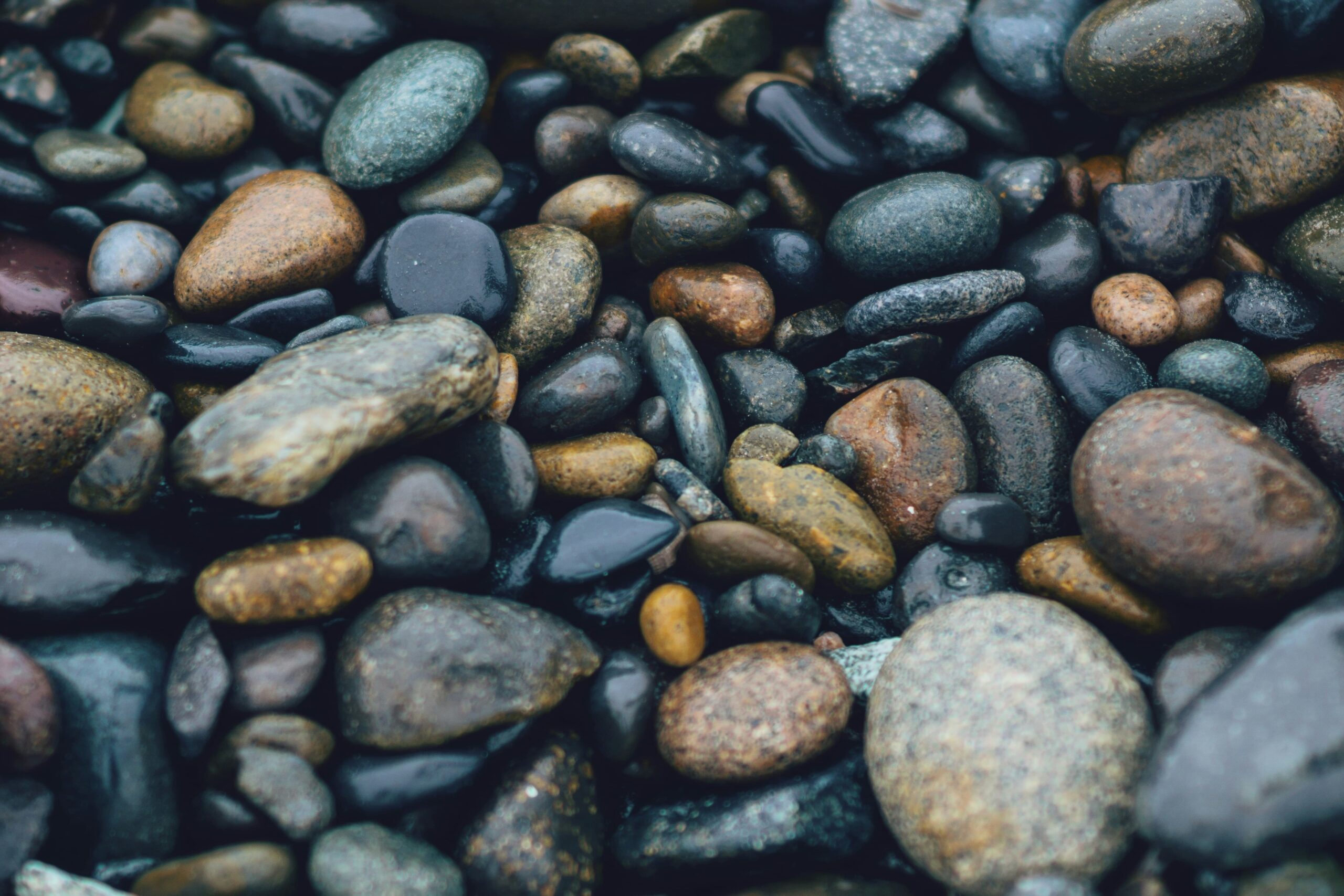
Store-bought fidget toys are nice and all, but sometimes, nothing satisfies busy fingers better than a good pocket rock.
Whether you’re stimming, pondering, or just sharing a moment with an inanimate object, a rock in a coat pocket makes the ideal companion for any foray beyond your front door.
How can you be sure your pocket rock is a good one, though?
First and foremost, because you chose it for yourself, it is likely already perfect. If you’re still shopping around in gravel piles or pebbled shores or forest floors, we’ve prepared a quick guide to help you select your new pocket-sized pet rock.
Ideal Pocket Rock Size
Think about what you need from your pocket rock. Are you most comfortable with palm-sized stones, or would you like your to be a bit smaller? If you fidget a lot with your fingertips, would you prefer something you can stroke without gliding off the surface? Or would it be better if you had a tiny stone that you could pass back and forth between your fingers? These might seem like simply questions, but hosting a wrong-sized stone in your pocket runs the risk of throwing your day completely off balance.
Think also about the weight: At what point will the weight of your rock become a distraction? If you casually throw your hoodie on a table with your pocket rock in it, will there be a loud banging noise that will startle any onlookers? If so, your rock might be too large, too heavy, and best returned to the great outdoors.
Desirable Pocket Rock Shape
For some, finding an almost perfectly round stone might be a transcendental act of satisfaction. For others, laying claim to a rock that tapers to fit your grip and the curve of the hand might fire all the right happy brain chemicals. For others still, the selection of shape might be highly subjective, and more in-depth than we can hazard to describe here.
Rule of thumb: If you hold it and you love it immediately, your pocket rock has a good shape. If you honestly cannot be forced to care one way or the other, maybe find one that is fairly round. Just to be on the safe side.
Texture Is Important
If your brain is of the neurodivergent variety, or if you just have strong preferences around your sensory experiences, it’s likely you already have an array of opinions regarding good and bad textures. These are likely completely unique to your particular profile, so we won’t attempt to tell you what textures you should want most.
What we can do, however, is list out a few considerations. What kind of emotions do these textures evoke for you?:
- Smooth
- Porous
- Pitted
- Rough
- Sandy
- Gritty
- Glassy
If the idea of any of these textures gave you an instant ick, those should be avoided. If thoughts of any of these textures make you light up inside, that’s where your heart should lead you.
We should also warn you to consider skipping potential pocket rocks with sharp edges. You don’t want to accidentally slice open a digit while fidgeting.
Consider the Color
Although a pocket rock might be kept out of sight most of the time, color can still by essential for the discerning goblin.
If you’re inclined to associate colors with certain meanings or characteristics, let your personal esoteric cosmology guide you. Black is commonly associated with protection, for example, and green is often considered a color of abundance.
Crystal Magic
Let’s take rock color one step further: If you’re someone that happens to be interested in crystals and their purported powers of healing and spiritual empowerment, adopting a crystal as your pocket rock is probably an obvious next step. That’s great!
The internet is full of information on healing crystals and their properties. If you’re new to crystal magic, this How Stuff Works article might be a good place to start reading. Expect to fall down a rabbit hole as you encounter more and more crystals!
If you’re looking to purchase a crystal (or multiple crystals) to carry in your pocket, note that some crystal mining practices are detrimental to the environment and exploit workers, including child laborers.
Consider scouring thrift stores for a crystal find, purchasing from sellers who disclose how they source their stones, or even becoming a rockhound and finding these special stones yourself. If there’s a mineralogical society in your area, reaching out to them might well result in knowing what crystals (as well as other stones) you can find locally.
Where to Find Your Pocket Rock
Is there a particular place in nature or your neighborhood that simply feels like home to you? Somewhere you associate with feeling particularly connected to the universe and everything in it.
This location is probably a good place to find your pocket rock.
Once you get to that location and consider your shape, size, texture, and color needs, unless your attention is drawn immediately to a particular rock, it’s time to start searching. Keep looking, you’ll find the perfect one soon enough.
When that happens, take a moment to consider its immediate environment. Will picking up the rock disturb any moss or other plant life growing on it? Is it providing shelter to any bugs? If so, is additional shelter available to them nearby? It’s impossible to not impact other lifeforms by wandering in nature (and taking home a single rock), but try to do the least amount of harm as possible.
Additionally, if you’re in the United States and looking for rocks on public land, the Bureau of Land Management and Forest Service provide guidance on what kind of mineral collecting is and is not allowed. The National Park Service has stricter rules, and generally prohibits all collecting activities. The gift shops of National Monuments might have a selection of stones for purchase, however!
Rocks with Stories
Maybe you’ll find a rock that doesn’t need to be sourced from nature. Maybe you have a rock associated with a particular life event. A stone scavenged from the site of a canonical event in your personal timeline. An heirloom rock bestowed by an elder relative. A perfect specimen gifted by a fellow goblin.
These, too, make wonderful pocket rocks. Just be prepared for the real possibility that such a stone may one day be lost or misplaced due to common but unfortunate circumstances. If you’re unable to bear the thought of losing such a piece, it’s better for it to live on a mantle or windowsill at home. Treat your personal treasures in the way that feels right for you.
Happy pocket rock collecting!